
 Image 1 of 1
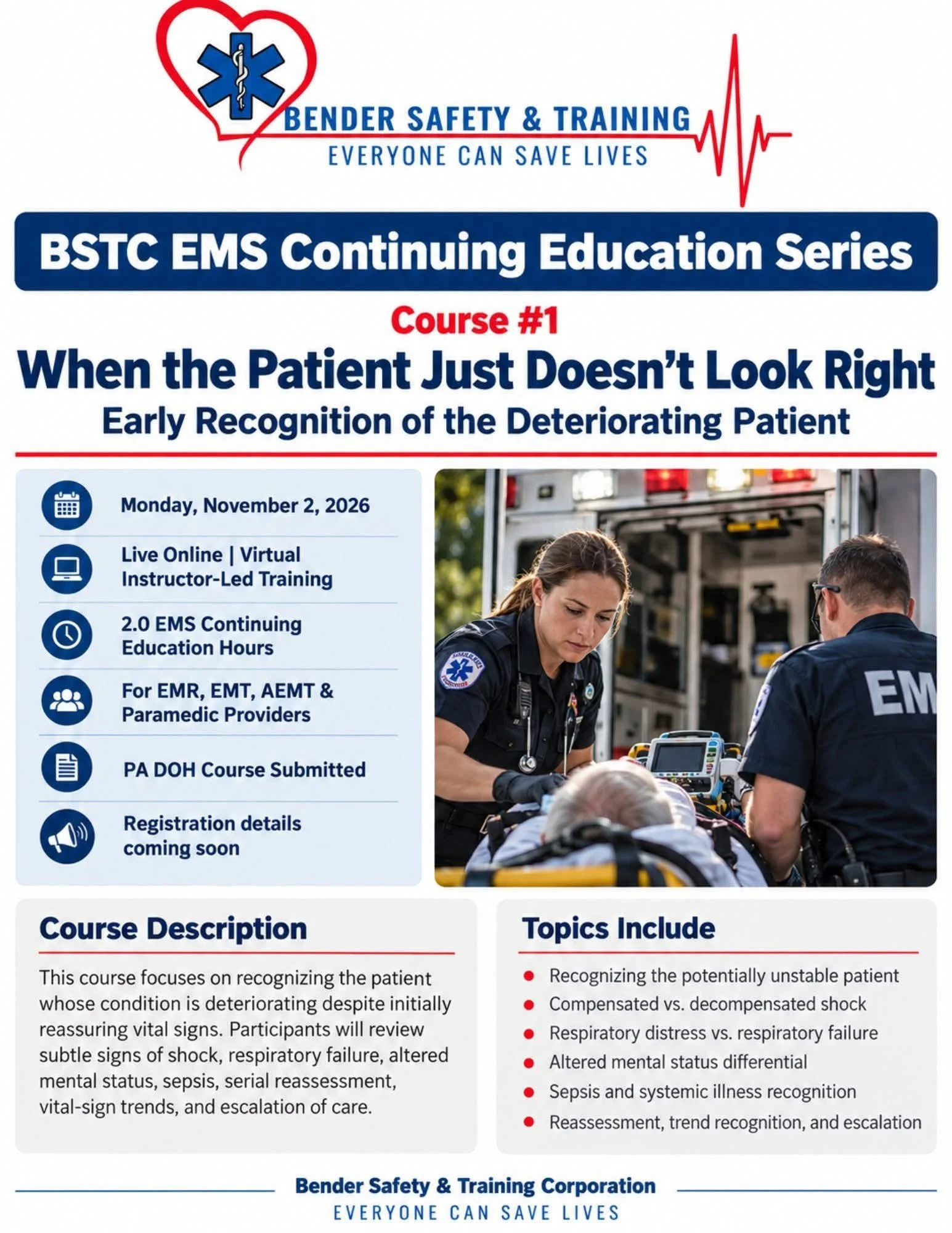
Bender Safety & Training is officially kicking off our new EMS Continuing Education Series with Course #1:
“When the Patient Just Doesn’t Look Right”
Early Recognition of the Deteriorating Patient
Monday, November 2, 2026
6:00 PM – 8:00 PM
Live Online / Virtual Instructor-Led Training
2.0 EMS Continuing Education Hours
Open to EMR, EMT, AEMT, and Paramedic providers
We have all had that patient where the monitor doesn't look terrible, the vital signs aren't screaming at you, but something just doesn't feel right.
This course focuses on recognizing those patients before they fully crash.
We will cover subtle signs of deterioration, compensated versus decompensated shock, respiratory distress versus respiratory failure, altered mental status, sepsis and systemic illness, serial reassessment, vital-sign trends, and knowing when it is time to escalate care, add resources, or move quickly toward definitive care.
This is not designed to be two hours of reading PowerPoint slides. The course will include progressive patient cases, real-world decision-making, polling, discussion, and plenty of “what would you do next?” scenarios.
This course is approved through the DOH for 2 hours of con ed.
EMS agencies interested in hosting future BSTC Continuing Education Series courses are also encouraged to reach out.
Bender Safety & Training Corporation
Everyone Can Save Lives